Choosing an orthopedic implant is not merely a purchasing decision. It can influence fixation, rehabilitation, revision risk, and a patient’s confidence after surgery. Why is it important to choose orthopedic implants with consistent batch quality? Because small variations can become significant inside the human body.
Dr. Atul Gawande, a surgeon and patient-safety authority, wrote, “The volume and complexity of what we know has exceeded our individual ability to deliver its benefits correctly, safely, or reliably.” This principle applies directly to implant selection. A dependable manufacturer should control raw materials, machining tolerances, surface treatment, sterilization, packaging, and final inspection. Each batch should provide traceable records, dimensional reports, material certificates, and biological safety evidence. The implant should not only look polished. Its performance must remain predictable.
Clinical teams can ask practical questions. Are titanium composition and hardness tested consistently? Are porous coatings inspected under defined procedures? Does the supplier investigate deviations openly? Can it provide samples from different production batches? These details matter when a femoral stem must fit tightly or a screw thread must engage smoothly.
No supplier is perfect. That deserves honest attention. A strong quality system does not promise zero variation; it detects, limits, and explains variation. Buyers should also review complaint handling, supplier audits, regulatory history, and long-term clinical data. Consistency is built through disciplined manufacturing and transparent evidence. It should never depend on attractive brochures or a single successful sample.
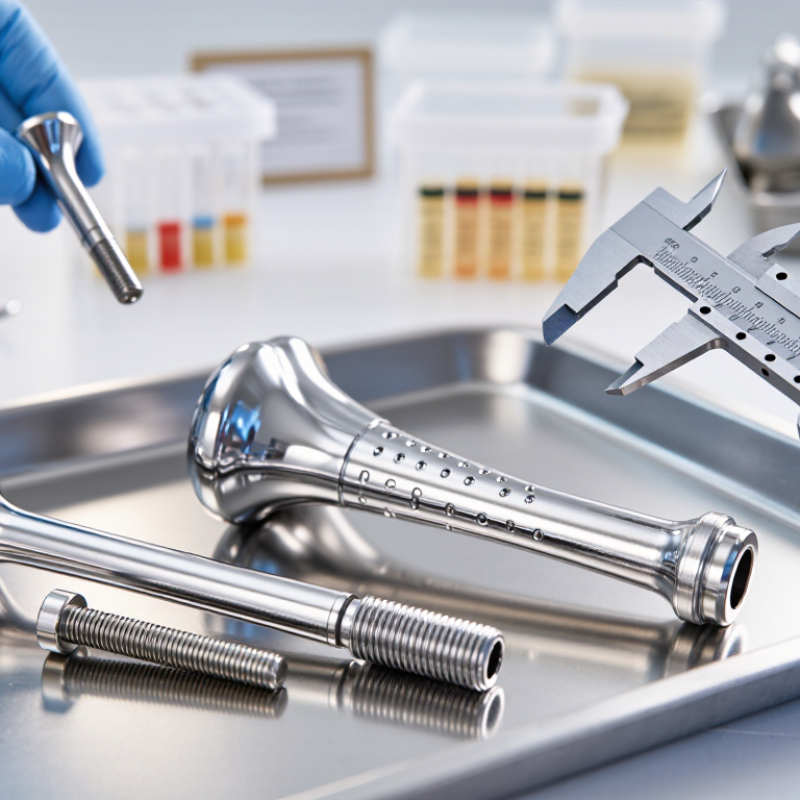
How to Choose Orthopedic Implants with Consistent Quality?
Define Quality Standards for Orthopedic Implants
Quality begins with measurable standards, not attractive packaging. The World Health Organization reported in 2022 that musculoskeletal conditions affect approximately 1.71 billion people worldwide. That scale makes implant consistency a clinical responsibility. Define requirements for alloy composition, dimensional tolerance, surface finish, fatigue strength, corrosion resistance, and sterilization. Each batch should have traceable material certificates and inspection records.
Use recognized frameworks, including ISO 13485 for quality management, ISO 10993 for biological evaluation, and applicable ASTM mechanical-testing methods. Request evidence from fatigue, wear, packaging, and sterilization validation. A supplier should explain how rejected components are isolated. It should also provide corrective-action records without hiding uncomfortable details. Small gaps matter.
Clinical evidence adds another layer. The UK National Joint Registry’s 21st Annual Report documents more than four million joint replacement procedures, supporting long-term comparison of implant performance. Review registry data, revision rates, complaint trends, and surgeon feedback together. Laboratory strength alone is not enough. An implant may pass a test yet perform poorly under unusual loading or poor alignment. That is where selection becomes difficult. Independent audits, lot-level records, and transparent post-market surveillance reduce uncertainty, although they cannot eliminate it. Some standards may still need refinement as new materials and surgical techniques develop.
Choosing an orthopedic implant requires more than checking a material name. Titanium alloys offer strength and relatively low density, while cobalt-chromium alloys provide high wear resistance. Ceramic components can reduce metal wear, but they demand careful manufacturing and handling. Material selection should match anatomy, loading, fixation method, and patient activity.
Design details deserve equal attention. Examine taper geometry, surface texture, locking mechanisms, and stress distribution. A porous coating may support bone ingrowth, yet excessive roughness can complicate revision surgery. The American Joint Replacement Registry 2023 Annual Report analyzed more than 2.8 million hip and knee procedures, showing why large registry datasets matter when comparing revision patterns across implant designs. Laboratory wear results are useful. They are not clinical proof.
Clinical performance should be reviewed through independent registries, peer-reviewed studies, and transparent follow-up periods. The UK National Joint Registry’s 21st Annual Report tracks millions of joint replacement procedures and reports outcomes by fixation, implant type, age, and sex. Look for survivorship beyond two years. Early success can mislead. Also check adverse-event reporting, sample size, surgeon experience, and loss to follow-up. A device with excellent laboratory performance may perform differently in heavier or highly active patients. No implant is perfect. That uncomfortable fact should remain visible during procurement and clinical review.
A practical, non-brand comparison framework for reviewing orthopedic implant materials, design controls, manufacturing quality, and clinical evidence.
| Assessment Area | Material or Design Option | Typical Technical Characteristics | Quality and Manufacturing Checks | Clinical Performance Considerations | Questions for Supplier or Hospital Review |
|---|---|---|---|---|---|
| Material | Titanium alloy (Ti-6Al-4V / Ti-6Al-4V ELI) |
Typical density: approximately 4.4 g/cm³. Elastic modulus: approximately 110 GPa, lower than cobalt-chromium and stainless steel. Good specific strength and established biocompatibility for many orthopedic applications. |
ASTM F136 ASTM F1472 Verify chemical composition, oxygen and nitrogen limits, tensile properties, heat treatment, surface condition, and traceability. | Commonly used in trauma, spinal, and joint-related implants. Its lower stiffness than cobalt-chromium can help reduce stiffness mismatch, but fixation and geometry remain critical. | Is the alloy grade clearly specified? Are heat-treatment records, lot certificates, fatigue data, and corrosion-testing results available? |
| Material | Cobalt-chromium-molybdenum alloy (Co-Cr-Mo) |
Typical density: approximately 8.3–8.5 g/cm³. Elastic modulus: approximately 210–240 GPa. High hardness, wear resistance, and corrosion resistance when properly processed. |
ASTM F75 ASTM F799 Check alloy chemistry, casting or forging quality, inclusions, porosity, surface finish, dimensional accuracy, and fatigue strength. | Frequently used in load-bearing components and articulating surfaces. High stiffness and wear resistance may be advantageous, while metal sensitivity and debris should be considered in the clinical context. | What controls are used for inclusions, carbide distribution, polishing, wear testing, and metal-ion or corrosion risk assessment? |
| Material | Austenitic stainless steel (commonly 316L) |
Typical density: approximately 8.0 g/cm³. Elastic modulus: approximately 190–200 GPa. Good strength and manufacturability; performance depends strongly on composition, processing, and surface condition. |
ASTM F138 Confirm low-carbon grade, molybdenum content, corrosion resistance, passivation, surface cleanliness, and mechanical properties. | Widely used in temporary or trauma fixation devices. Long-term performance requires careful evaluation of corrosion, fatigue, fretting, and the intended duration of implantation. | Is the product intended for temporary or permanent implantation? Are passivation validation, corrosion testing, and fatigue results documented? |
| Material | Ultra-high-molecular-weight polyethylene (UHMWPE) |
Low density, typically about 0.93–0.95 g/cm³. Low friction and useful toughness in bearing applications. Oxidation, crosslinking level, sterilization history, and manufacturing process influence performance. |
ASTM F648 Evaluate molecular weight, oxidation index, residual free radicals, crosslinking, wear rate, sterilization validation, and packaging integrity. | Used as a bearing material in joint reconstruction. Wear particles, oxidation, component conformity, and fixation can influence long-term revision risk. | What are the oxidation and wear data after accelerated aging? Is the sterilization method compatible with the polymer formulation? |
| Material | PEEK and carbon-fiber-reinforced PEEK |
Density commonly around 1.3–1.5 g/cm³, depending on formulation. Elastic modulus of unfilled PEEK is approximately 3–4 GPa; reinforcement can substantially increase stiffness. Radiolucent compared with metals. |
ASTM F2026 Verify polymer grade, fiber orientation, radiolucency, dimensional stability, sterilization compatibility, fatigue performance, and particulate control. | Used in selected spinal and trauma applications. Radiolucency can support imaging, but implant stiffness, endplate interaction, migration, and bone integration must be assessed for the intended design. | Are material properties reported for the final molded or machined component? Is there evidence for subsidence, migration, fatigue, and bone-contact performance? |
| Material | Alumina or zirconia-toughened alumina ceramic |
High hardness and low wear potential in appropriate bearing combinations. Elastic modulus is substantially higher than that of bone. Brittle behavior means defects, edge loading, and impact tolerance require strict control. |
ISO 6474-1 Review grain size, density, flexural strength, fracture toughness, surface roughness, dimensional inspection, and proof-testing procedures. | Can provide low-wear articulating surfaces in selected joint systems. Clinical outcome depends on component positioning, bearing pairing, fixation, and protection from damage during handling. | Are proof-testing, fracture-toughness, wear, and edge-loading data available for the final component geometry? |
| Design | Porous or textured bone-contact surface |
Surface architecture may be created by coating, additive manufacturing, or controlled texturing. Pore size, porosity, interconnectivity, roughness, and coating adhesion affect the intended biological response. |
Measure coating thickness, adhesion strength, pore morphology, contamination, roughness, and fatigue durability. Confirm validated cleaning and sterilization processes. | Designed to support bone ongrowth or ingrowth in selected indications. Clinical fixation depends on bone quality, implant stability, surgical technique, and the specific surface design. | Are the surface parameters measured on every production lot? Is there clinical or preclinical evidence for the exact surface and implant geometry? |
| Design | Modular junctions and locking interfaces |
Include tapers, screws, locking mechanisms, and interchangeable components. Performance depends on contact geometry, tolerances, preload, micromotion, and resistance to fretting or loosening. |
Inspect taper dimensions, torque or assembly requirements, locking strength, angular stability, fatigue resistance, and interchangeability controls. | Modularity can support intraoperative flexibility, but additional interfaces may introduce risks related to fretting, corrosion, loosening, mismatch, or assembly error. | Are assembly instructions unambiguous? Have worst-case combinations been tested for fatigue, fretting, corrosion, and locking failure? |
| Design | Geometry and fixation strategy | Important variables include implant size range, anatomical conformity, fixation method, load path, edge profile, screw trajectory, and stress concentration. | Review dimensional tolerances, finite-element assumptions, fatigue testing, worst-case size testing, instrument compatibility, and verification of the final design output. | Appropriate geometry may improve initial stability and load transfer. Clinical results are sensitive to patient anatomy, bone quality, alignment, surgical technique, and rehabilitation. | Were the smallest and largest sizes tested? Does the evidence represent the intended anatomy, fixation method, and patient population? |
| Clinical Performance | Mechanical durability and fatigue resistance | Fatigue performance should be evaluated under loading conditions representative of the intended anatomical site, fixation mode, and worst-case geometry. | Look for validated test methods, sample size justification, run-out criteria, fracture inspection, and documented deviations. Relevant standards may include ISO 7206, ASTM F1717, or other indication-specific methods. | Laboratory fatigue results support, but do not replace, clinical evidence. Failure modes may include fracture, loosening, migration, wear, or deformation. | Do the test loads and boundary conditions reflect real use? Are failures investigated with documented root-cause analysis? |
| Clinical Performance | Biocompatibility and biological safety | Evaluation should address the finished, sterilized device, including materials, residues, coatings, colorants, adhesives, and manufacturing contaminants. | ISO 10993 series Review risk-based biological evaluation, chemical characterization, sensitization, irritation, cytotoxicity, systemic toxicity, and implantation data where applicable. | Biological response depends on material chemistry, surface condition, wear debris, patient factors, and duration of contact. A material name alone does not establish safety for every design. | Was testing performed on the final finished device? Are all patient-contacting materials and process residues identified? |
| Clinical Performance | Sterilization, packaging, and shelf life | Sterility assurance, packaging integrity, material compatibility, and labeled shelf life must be controlled for the complete sterile barrier system. | ISO 11135 ISO 11137 ISO 11607 Verify sterilization validation, residuals, seal strength, transit testing, aging studies, and package-opening usability. | Packaging or sterilization failures can compromise an otherwise well-designed implant. Reprocessing instructions must be appropriate for reusable instruments. | Is the labeled shelf life supported by real-time or accelerated aging? Are transport and storage conditions clearly defined? |
| Clinical Performance | Clinical evidence and post-market surveillance | Evidence should match the exact indication, implant design, material combination, fixation method, and patient population. | Review prospective or registry data, follow-up duration, revision rates, adverse-event reporting, complaint trends, corrective actions, and risk-management updates. | Important outcomes may include survivorship, revision or reoperation, pain and function scores, radiographic changes, infection, loosening, migration, fracture, and patient-reported outcomes. | Is follow-up long enough for the expected failure modes? Are outcomes reported separately by indication, implant size, surgical approach, and patient risk factors? |
| Quality System | Process consistency and traceability | Consistent quality requires controlled suppliers, validated processes, calibrated equipment, trained personnel, inspection plans, and lot-level records. | ISO 13485 ISO 14971 Check nonconformance handling, change control, corrective and preventive actions, supplier qualification, batch release, and device history records. | Manufacturing consistency reduces variation in dimensions, surface condition, cleanliness, mechanical properties, and packaging performance across production lots. | How are material, process, design, and supplier changes assessed? Can each implant be traced from raw material through sterilization and distribution? |
Choosing an orthopedic implant requires more than comparing dimensions or surface finishes. Manufacturing discipline often determines whether quality remains stable across thousands of units. I look for a documented quality system, commonly aligned with ISO 13485, and clear control over critical processes.
Ask how raw materials are verified. Check whether titanium or cobalt-chrome certificates match incoming inspection records. Review machining tolerances, cleaning procedures, packaging controls, and sterilization validation. Batch records should connect each implant to its materials, operators, equipment, and inspection results. Traceability matters when a problem appears months later.
Regulatory compliance also deserves direct verification. A supplier should provide current technical documentation, risk analysis, biocompatibility evidence, and clinical support appropriate to the implant. Certificates alone are not enough. They can look reassuring while leaving important gaps. Confirm the product’s authorization in the intended market, labeling accuracy, post-market surveillance, and complaint-handling procedures.
Ask for evidence, not polished promises. A facility tour can reveal practical details: calibrated gauges, controlled clean areas, and workers following written instructions. Independent audits may expose weaknesses that internal reports miss. I would also compare nonconformance trends, because a perfect record may be incomplete rather than excellent.
No process is flawless. Even strong manufacturers can overlook supplier changes or documentation delays. That is why periodic audits, change notifications, and transparent communication remain essential after approval. Consistent quality is demonstrated repeatedly, not declared once.
Choosing orthopedic implants requires more than comparing dimensions or unit prices. Supplier reliability should be tested through documented evidence. The ISO Survey 2022 reported 31,081 valid ISO 13485 certificates worldwide. Certification helps, but it does not prove every batch is consistent. Ask for recent audit findings, corrective-action records, traceability samples, and change-control procedures. A reliable supplier should identify raw material lots within minutes, not days.
Quality control must also connect with clinical evidence. The American Joint Replacement Registry’s 2024 Annual Report tracks more than 3.2 million hip and knee procedures. Such registries show why implant performance needs long-term monitoring, not only factory inspection. Review sterilization validation, dimensional inspection results, fatigue testing, packaging integrity, and complaint trends. FDA medical-device recall reports also show that quality failures remain a recurring industry risk. A clean presentation can still hide weak controls.
Tips: Request three recent batch records. Verify testing laboratories independently. Check whether nonconforming products are quarantined physically. Interview the quality manager, not only the sales contact. Ask how supplier changes are approved. If answers sound perfect, investigate further. In practice, I have found that missing timestamps and vague deviation reports deserve more attention than polished certificates. No system is flawless. The important question is whether problems are detected early, documented honestly, and corrected with measurable follow-up.
Implant selection should begin with evidence, not catalog promises. The American Joint Replacement Registry’s 2024 Annual Report covered more than three million hip and knee procedures. It shows why survivorship data matters across age, fixation method, and patient risk. The National Joint Registry’s 21st Annual Report also tracks revision outcomes across more than four million procedures. These registries cannot predict every patient. Still, they reveal patterns that small studies may miss.
Cost comparison must include the full treatment pathway. Review the implant price, operating time, sterilization, rehabilitation, and possible revision costs. A cheaper device may create a false saving if early loosening causes another operation. Measure patient outcomes, too. Pain scores, mobility, readmissions, infection rates, and revision-free survival offer a clearer view than purchase price alone. No dataset is perfect. Hospital coding can be incomplete, and follow-up periods may differ. That limitation deserves honest discussion.
Tips: Request registry evidence with at least five to ten years of follow-up. Compare like with like, including patient age and procedure type. Ask surgeons about handling, instrumentation, and observed complications. Check whether published evidence matches your hospital’s patients. A spreadsheet helps. It may still miss the human cost of delayed recovery.
Titanium alloys offer strength with relatively low density. Cobalt-chromium alloys resist wear. Ceramic parts can reduce metal contact.
Consider anatomy, body weight, activity, loading, and fixation method. A highly active patient may create greater mechanical demands.
Examine taper geometry, surface texture, locking mechanisms, and stress distribution. Small design differences can affect stability and revision difficulty.
Porous coatings may encourage bone ingrowth. Excessive roughness can complicate later removal. The benefit is not automatic.
No. Laboratory results are useful, but they cannot fully predict patient outcomes. Real bodies behave less neatly.
Request independent registry data, peer-reviewed studies, adverse-event reports, and transparent follow-up. Five to ten years of data is more informative.
Review pain, mobility, readmissions, infection rates, operating time, rehabilitation, and revision-free survival. A low price may hide future costs.
Registries may contain incomplete coding and unequal follow-up. Small studies can miss uncommon problems. The review may still be imperfect.
Choosing orthopedic implants with consistent quality requires a structured evaluation from product design through long-term clinical use. Begin by defining clear quality standards, including dimensional accuracy, mechanical strength, biocompatibility, durability, and performance consistency across production batches. Assess the implant’s materials, design features, sterilization compatibility, and available clinical evidence to determine whether it can meet the demands of different patient conditions. Why is it important to choose orthopedic implants with consistent batch quality? Reliable batch consistency helps reduce variation in surgical results, supports predictable implant performance, and strengthens patient safety throughout treatment and recovery.
A thorough selection process should also verify manufacturing controls, traceability, inspection procedures, and compliance with applicable regulatory requirements. Suppliers should demonstrate stable production capacity, documented quality management systems, responsive technical support, and a strong history of corrective action when issues arise. Finally, compare scientific evidence, total costs, revision risks, and long-term patient outcomes rather than focusing only on the initial purchase price. This balanced approach helps healthcare providers select implants that offer dependable quality, clinical value, and sustainable patient benefits.

Voila Orthopedic Implants